Per te scalerei le Alpi e l’Himalàya
Sfigurar vorrei la tua risata gaia
di spasmi d’amore, candido mio giglio,
d’ogni fiore più bella, sogno di rosa,
profumo di pesco, canto di mimosa!
Mi vuoi? “Ti voglio!” Pregusto il giaciglio!
Mi dici: “Ti penso, t’attendo, ti bramo!”
Anch’io ti bramo, e azzardo un “ti amo!”
“Vieni, dai vieni, sto al numero venti!”
Venti di passione, tripudio, bollore!
“Venti, settimo piano, senz’ascensore!”
Sette! Oh Giglio, Oh Rosa, oh Mimosa!
Sette?! Sette son troppi! No, non è cosa!
C. M. Marenco (2015)
Alberto Repetti, La Jella Addormentata nel Bosco (1993)
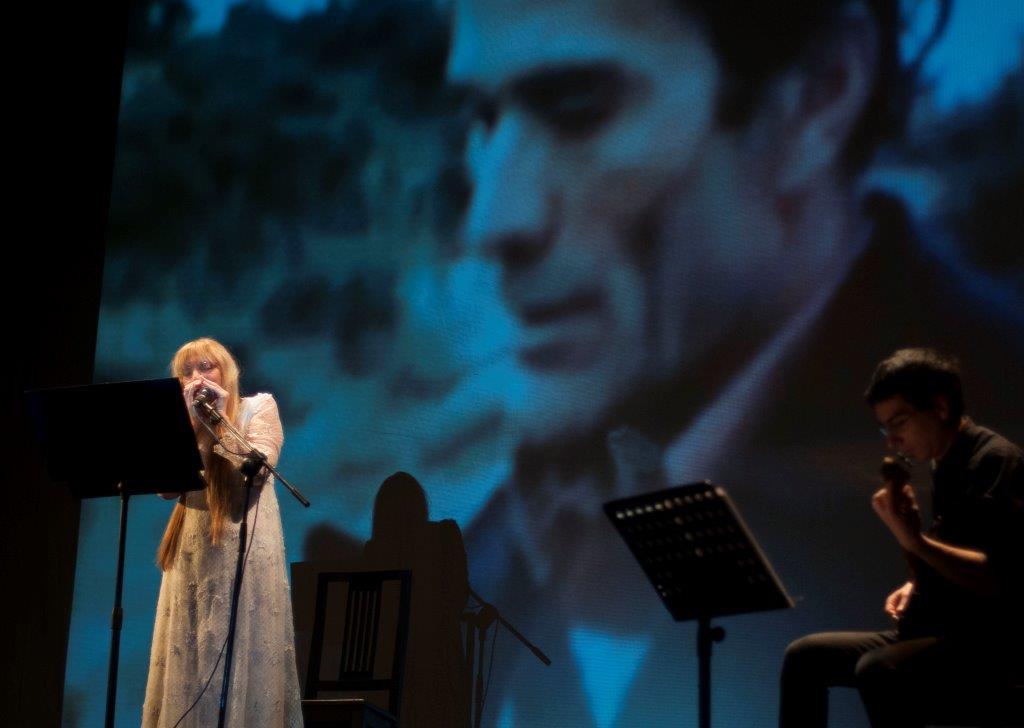
Scrivere di Pasolini è come camminare su un filo teso tra due grattacieli, mantenendo un difficile equilibrio tra il vento dell’agiografia e quello della calunnia. Il personaggio è così noto e controverso che il pubblico parte inevitabilmente da un idea preconcetta. Io stesso mi son chiesto se avrei dovuto spogliarmi di ogni mia conoscenza, far tabula rasa, per affrontare nel modo corretto Paesaggi Perduti, elaborazione drammaturgica di testi pasoliniani, eseguita da Marco Romei per il Teatro delle Nuvole.
Non è stato necessario.
E’ bastato che Franca Fioravanti, regista ed interprete, ci porgesse i versi “Io sono una forza del passato. Solo nella tradizione è il mio amore…” per trovarsi lì ma anche altrove, allo stesso modo in cui, bambini, si veniva rapiti in un mondo altro dalle parole “C’era una volta…”
E così, intrappolati nella narrazione come dallo sguardo del vecchio marinaio, abbiamo dovuto, voluto, lasciare tutto quel che sapevamo ed abbandonarci al fluire dell’evocazione.
La scena è spoglia, un leggio, una sedia, sullo sfondo luci ed immagini di Liliana Iadeluca* e le musiche ondivaghe di Bernardo Russo, eppure c’è tutto, perché, lo si nota dal silenzio, ci siamo noi.
Il testo parte dunque dalla poesia recitata da Orson Welles nella Ricotta, fornendo un luogo ed un tempo al nostro provenire, rivendicandone la dignità di grandi e piccole storie, di volti, madri, affetti, rinunce, ma anche lotte sociali. E’ la storia di un paese, di persone, di una cultura, contadina ma anche altissima, che attraversa una fase di transizione violenta, esposta alle proprie lacerazioni mai sanate, ad una guerra ancora più aspra perché interna, al mito straniero che si impone, identificata nel sorriso tra le lacrime di Marilyn. Marilyn è in qualche modo punto cardine della narrazione, perché ultimo mito, perché contemporaneamente bellezza spontanea ed incanalata, libertà ed omologazione. La morte di Marilyn, prima della morte anagrafica, è rappresentativa del successo della manipolazione di ogni cultura, di quel mostro dalla mille teste e nessun cervello che portava, e porta, il nome di civiltà dei consumi. A questo mostro si possono opporre solo le bandiere del nostro esser terra, popolo, storia… E la narrazione va oltre, anche oltre Pasolini – ma non dirò – rivelando scenari apocalittici, liberando urla, ponendo domande alle quali forse non è necessario dare una risposta, perché la verità non bisogna nominarla. Che appena la nomini, non c’è più.
Marco Romei, una volta di più, ha reso teatro un insieme di pensieri provenienti da più fonti: poesie, interviste, scene cinematografiche e teatrali, articoli giornalistici. Paesaggi Perduti è la narrazione sapientemente tessuta di quel che siamo stati, ma anche, e soprattutto, della “bellezza morale” pasoliniana, una bellezza che Franca Fioravanti ha cantato, cullato, urlato e qualsiasi altra cosa sia possibile fare con la voce, finché l’abbiamo sentita anche nostra.
Non c’è più spazio nell’oggi per questi paesaggi?
Sono realmente perduti?
Dagli applausi del pubblico, ma soprattutto dai mormorii affascinati di molti studenti direi si tratti di Paesaggi Ritrovati.
Da sempre il Teatro delle Nuvole s’incammina per il sentiero della bellezza, in punta di piedi, con grande rispetto. E’ una premessa necessaria, perché questo approccio umile, al servizio della poesia e della comunicazione, consente di aprire porte che altrimenti non si aprirebbero.
Con questo bagaglio di amore per la scrittura, di disponibilità e di lunga esperienza, nel 2011 il Teatro delle Nuvole ha oltrepassato la soglia della Casa Circondariale di Chiavari con un progetto del Laboratorio Teatrale curato da Franca Fioravanti e mirato alla condivisone di testi poetici legati al territorio ligure.
Si è trattato di un’esperienza ricchissima perché non facile, fatta di superamenti di barriere, conoscenza di altri mondi e linguaggi, nel tentativo di render corale una realtà fratta, individuale e … fuori dal coro.
Paesaggi è una sorta di riavvolgimento ideale della realtà, per poterla in qualche modo riscrivere. Così la poesia viene proposta, frammentata, raccogliendone i pezzi più significativi per ciascun detenuto, e ricomposta in un mosaico di emozioni fatte proprie, in un superamento della propria individualità di confine, che, finalmente, diviene canto comune.
Quel che si è perso, è andato in pezzi, è irrecuperabile, si ricrea in altra forma, diviene polifonia possibile, sul palco, ma soprattutto dentro ciascuno.
E così Attilio, Antonio, Federico, Gianfranco, Yassin, Mirko, Mustafà, William offrono la loro voce a questa liturgia liberatoria che si fa metatesto, donando a questa terra anche l’eco dei suoi luoghi e delle sue cuori reclusi.
Paesaggi diviene così canto, performance, opera nuova itinerante che, superate le barriere interne, non ha più confini.
Terra tu sei piena di grazia, i miei occhi sono nuovi.
Post musical letterario alla ricerca delle origini.
Riavvolgiamo il tempo e portiamoci tra il dicembre 1192 ed il febbraio 1194.
Riccardo I d’Inghilterra, noto come Cuor di Leone, di ritorno dalla terza crociata, vien fatto prigioniero da Leopoldo V, duca d’Austria, accusato dell’omicidio di Corrado del Monferrato, re di Gerusalemme. E’ probabile che le ragioni della sua cattura fossero altre, ma la storia di quest’epoca spesso si mischia alla leggenda e l’analisi delle fonti anziché chiarire i dubbi amplifica il mistero.
Di certo, fino a prossima smentita, sembra esserci il fatto che durante questa prigionia, Riccardo I scrive Ja nuns hons pris ne dira sa raison, uno dei pochissimi esempi di rotrouenge giunti ai giorni nostri. Ja nuns hons pris si discosta dalla tradizione amorosa di questo tipo di poesia lirica medievale di trovatori e trovieri, per il carattere politico del tema trattato: la propria prigionia.
Il testo, straordinario, è riportato nell’originale occitano ed in traduzione italiana, quanto alla musica ne esistono svariate versioni, prevalentemente monodiche, più o meno filologiche: tra esse vorrei tanto proporvi quella del 1970 dell’Early Music Consort di David Munrow, ma non sono riuscito a reperirla in un formato allegabile.
Non potendo proporvi Munrow, sottopongo alla vostra attenzione due incisioni molto distanti tra loro: la prima del musicista americano Owain Phyfe e la seconda del gruppo musicale francese Alla Francesca.
Per chi ha il coraggio di compiere un salto a pie’ pari di oltre 821 anni consiglio di passare direttamente alla seconda.
Per i “deboli di cuore”, invece, consiglio l’avvicinamento convincente, seppur edulcorato e ridotto alle prime due strofe, di Owain Phyfe, presente nell’album del 1999 Poets, Bards & Singers of Songs.
Probabilmente più prossimo al suono del tempo di Riccardo Cuor di Leone, questo il brano registrato dal gruppo francese Alla Francesca per l’album Richard Coeur de Lion, Troubadours et trouvères del 1997.
Ja nuns hons pris ne dira sa raison A droitement, se dolantement non: Mais par esfort puet il faire chançon. Mout ai amis, mais povre sunt li don. Honte i avront, se por ma reançon Sui ça deus yvers pris.
Mai nessun prigioniero potrà esprimere bene quel che sente senza lamentarsi: ma sforzandosi puo’ comporre una canzone. Ho molti amici, ma poveri sono i loro doni. Saranno biasimati, se per non darmi riscatto, son già due inverni che sono qui prigioniero.
Ce sevent bien mi home e mi baron, Ynglois, Normanz, Poitevin et Gascon Que je n’ai nul si povre compaignon Que je lessaisse, por avoir, en prison. Je nou di mie por nule rentrançon, Car encor sui pris.
Ma i miei uomini e i miei baroni, Inglesi, Normanni, Pittavini e Guasconi, Sanno bene che non lascerei marcire in prigione Per denaro neanche l’ultimo dei miei compagni. E non lo dico certo per rimproverarvi, Ma perché sono ancora qui prigioniero.
Or sai je bien de voir, certeinnement, Que je ne pris ne ami, ne parent, Quant on me faut por or ne por argent. Mout m’est de moi, mès plus m’est de ma gent; Qu’après ma mort avront reprochement, Se longuement sui pris.
Ora so bene, con certezza, Che un prigioniero non ha più parenti nè amici, Poiché mi si tradisce per oro o per argento. Soffro molto per me, ma più per la mia gente, Poiché, dopo, la mia morte sarà biasimata Se a lungo resterò prigioniero.
N’est pas mervoille se j’ai le cuer dolent, Quant mes sires mest ma terre en torment. S’il li membrast de nostre soirement Que nos feïsmes andui communement, Je sai de voir que ja trop longuement Ne seroie ça pris.
Non c’è da meravigliarsi se ho il cuore dolente, Dato che il mio Signore tormenta la mia terra. Se si ricordasse del nostro giuramento Che entrambi facemmo di comune accordo, So con certezza che mai, adesso, Da così tanto sarei prigioniero.
Ce sevent bien Angevin et Torain, Cil bacheler qui or sont riche et sain, Qu’encombrez sui loing d’aus, en autre main. Forment m’aidessent, mais il n’en oient grain. De beles armes sont ore vuit et plain, Por ce que je sui pris.
Lo sanno bene gli Angioini e i Turennesi, Quei baccellieri che son sani e ricchim ora, Che io sono lontano da loro, in mano ad altri. Mi aiuterebbero molto, ma non ci sentono. Di belle armi e di scudi sono privi, Perché io sono qui prigioniero.
Contesse suer, vostre pris soverain Vos saut et gart cil a cui je m’en clain; E por ce que je sui pris. Je ne di mie a cele de Chartrain, La mere Loëys.
Sorella Contessa, che conservi e protegga Il vostro alto pregio Colui cui mi appello E per cui sono prigioniero. E non lo dico certo a quella di Chartres, La madre di Luigi.
Due mercoledì fa ha avuto inizio questo cammino musical letterario nelle ballate omicide con due Murder Ballads di Nick Cave. Delle origini della prima, Henry Lee, si è parlato, letto ed ascoltato mercoledì scorso. Questo mercoledì è dedicato alla seconda, Where the Wild Roses Grow, in duetto con Kylie Minogue. Il brano di struggente liricità è qui proposto in una versione acustica registrata nel 2011 per l’album The Abbey Road Sessions.
Diversamente da Herny Lee, Where the Wild Roses Grow non trae origine diretta da una ballata più antica, tuttavia nel passato trova ispirazione, essendo composta con il pensiero rivolto a Down in the Willow Garden, brano irlandese di cui si hanno le prime tracce certe nel 1811, con il titolo Rose Connelly. Di Down in the Willow Garden vi propongo due versioni. La prima è vicina nel tempo (2013) e nel gusto ed è tratta dall’album Foreverly di Billie Joe Armstrong & Norah Jones.
Down in the willow gardenWhere me and my true love did meet,It was there we were courtin’,My love fell off to sleep.I had a bottle of burgundy wine,My true love she did not know.It was there I murdered that dear little girlDown on the banks below.I drew my saber through her,It was a bloody knife,I threw her into the river,It was a horrible sight.My father oft had told meThat money would set me freeIf I would murder that poor little girlWhose name was Rose Connelly.Now he stands at his cabin door,Wiping his tears from his eyes,Gazing on his own dear son, Upon the scaffold high.My race is run beneath the sun,The Devil is waiting for me,For I did murder that dear little girlWhose name was Rose Connelly La seconda è quella più canonica degli The Everly Brothers, registrata nel 1958.
E’, purtroppo, difficile trovare una versione di qualità che suoni come l’originale irlandese, perché il brano è divenuto famoso negli Stati Uniti, come ballata di stile appalachiano, soprattutto a partire dalle prime incisioni discografiche del 1927 e 1928 di Greyson & Whitter, con il titolo di Rose Conley.
Ad assicurarci l’origine irlandese della ballata è una poesia di William Butler Yeats, Down by the Salley Gardens del 1889:
Down by the salley gardens my love and I did meet;
She passed the salley gardens with little snow-white feet.
She bid me take love easy, as the leaves grow on the tree;
But I, being young and foolish, with her would not agree.
In a field by the river my love and I did stand,
And on my leaning shoulder she laid her snow-white hand.
She bid me take life easy, as the grass grows on the weirs;
But I was young and foolish, and now am full of tears.
di questa poesia esiste una suggestiva versione musicale della canadese Loreena McKennitt
In realtà la poesia di Yeats e tutte le ballate precedenti fanno riferimento seguenti versi di The Rambling Boys of Pleasure: “It was down by Sally’s Garden one evening late I took my way.‘Twas there I spied this pretty little girl, and those words to me sure she did say.She advised me to take love easy, as the leaves grew on the tree.But I was young and foolish, with my darling could not agree.” Questa la versione del 1979 di Andy Irvine, che conserva il sapore di un’antica semplicità.
Follia giovanile e morte dell’amata non possono che ricondurre all’ Ophelia di Hamlet (W. Shakespeare, 1602). Per tale ragione in testa ed in coda al post troviamo i dipinti di Arthur Hughes (1852) e di John E. Millais (1852), entrambi dal titolo Ophelia.
Continuazione ideale del post musicale di mercoledì scorso, questo odierno va indietro nel tempo a ricercare versioni alternative alle due Murder Ballads presentate da Nick Cave nell’album omonimo.
La prima di queste proposte risale al 1963 s’intitola Love Henry ed è presentata dalla profonda voce di Judy Henske.
Questa versione ha una lunga introduzione parlata da parte della stessa cantante ed il brano vero e proprio inizia solo al minuto 4:49, si tratta tuttavia di quella con l’audio migliore.
Come in, Come in, my Love Henry, stay with me this night. And you shall have both candle and coal, my fire burning bright. Oh oh oh my fire burning bright.
Well, I won’t come in, I can’t come in, I won’t come in at all. There’s a lady ten times fairer than you waiting in Lord Barnett’s Hall. Oh oh oh ten times fairer than you.
And then he bended o’re her snow white pillow, Give her a kissed so sweet She drew her penknife in her hand – wounded him full deep. Oh oh oh she wounded him full deep.
And then she picked him up by his long yellow hair Also by his feet She threw him in her cool, draw well full 50 fathoms deep.
Lie there, lie there, Love Henry, than she cried, I know you will not swim That lady ten times fairer than me will never see you again. Oh oh oh she’ll never see you again.
Lie down, lie down, you pretty little bird. Light upon my knee Oh no, a girl who’d kill her own hearts love Might hurt a little bird like me.
If I had my arrow in my hand Bow on a tuneful string I’d shoot a dart straight through your heart You’d no longer sing. Oh oh oh and you’d no longer sing.
Come in, Come in, my Love Henry, stay with me this night. And you shall have both candle and coal, my fire burning bright. Oh oh oh my fire burning bright.
La seconda, con lo stesso titolo, Love Henry, è cantata da Bob Dylan nel 1993.
“Get down, get down, Love Henry,” she cried. “And stay all night with me. I have gold chains, and the finest I have I’ll apply them all to thee.”
“I can’t get down and I shan’t get down, Or stay all night with thee. Some pretty little girl in Cornersville I love far better than thee.”
“He layed his head on a pillow of down. Kisses she gave him three. With a penny knife that she held in her hand She murdered mortal he.”
“Get well, get well, Love Henry, ” She cried, “Get well, get well,” said she. “Oh don’t you see my own heart’s blood Come flowin’ down so free?”
“She took him by his long yellow hair, And also by his feet. She plunged him into well water, where It runs both cold and deep.”
“Lie there, lie there, Love Henry,” she cried, “Til the flesh rots off your bones. Some pretty little girl in Cornersville Will mourn for your return.”
“Hush up, hush up, my parrot,” she cried, “And light on my right knee. The doors to your cage shall be decked with gold And hung on a willow tree.”
“I won’t fly down, I can’t fly down And light on your right knee. A girl who would murder her own true love Would kill a little birdlike me.”
Dopo queste due tra le più significative versioni americane, ve ne presento quella tradizionale, voce e violino, di James Finlay che reca l’originale titolo scozzese Young Hunting.
Young Hunting’s to the castle gone As fast as he could ride He’s a hunting horn about his waist A broadsword by his side A broadsword by his side
And when he came to the castle gates He’s pulled all at the pin No one so ready as the lady herself To arise and let him in Arise and let him in
You’re welcome here, my Young Hunting For coal and candle lights And so welcome are you, Young Hunting To lie with me this night To lie with me this night
I thank you for your light lady So do I for your coal But there’s a fairer woman than ten of thee Meets me at Brandie’s Well Meets me at Brandie’s Well
He bent down o’er his saddlebow To kiss her ruby cheek But she took out a little pen knife And wounded him full deep And wounded him full deep
She’s called on her maid Catherine So long before the day I have a dead man in my bower I wish he was away I wish he was away
They booted him and spurred him As he was wont to ride They’ve taken him to the wide water They call the river Clyde They call the river Clyde
One has taken him by his feet The other one by his head In the deepest parts of Clyde water It’s there they made his bed It’s there they made his bed
Lie there, lie there, you young Hunting ‘Til the blood seep from your bone That fairer woman than ten of me Will wait long ere you come home Wait long ere you come home
Then up and spoke the bonny little bird That stood all in the tree Go home, go home, you false lady Pay your maid her fee And pay your maid her fee
Come down, come down, my bonny little bird Come down into my hand Your cage I’ll make of the fine beaten gold Where now is the willow wand Where now is the willow wand
Keep your cage of beaten gold And I will keep my tree For as you did with Young Hunting You’d do the same with me You’d do the same with me
And it fell out on the very next day The king was going to ride And he has sent for for Young Hunting To ride all at his side To ride all at his side
The lady swore by the grass so green So did she by the corn I saw not your son Young Hunting Since yesterday at morn Yesterday at morn
But I saw him ride to Clyde Water I fear he’s drowned therein And they have sent the divers bold To dive for Young Hunting To dive for Young Hunting
Then up and spoke the bonny little bird That flew above their heads: Dive on, dive on, you divers bold For there he lies indeed For there he lies indeed
But leave off your diving in the day And dive all in the night And where Young Hunting he lies slain The candles will burn full bright The candles will burn full bright
So they left off diving in the day And dived all in the night And where Young Hunting he lay slain The candles burned full bright The candles burned full bright
White, white were his wounds all washed As white as a linen clout But when the lady she came near The blood come gushing out The blood come gushing out
Well it’s surely been my maid Catherine And ill may she betide For I’d have never slain my Young Hunting And thrown him in the Clyde And thrown him in the Clyde
So they have taken the maid Catherine And a bonfire set her in But the fire wouldn’t take upon her cheek Nor yet upon her chin Nor yet upon her chin
So they’ve taken out the maid Catherine They’ve thrown the lady in And the fire took fast on her fair body She burned like holly green She burned like holly green
Per chi ha resistito fin qui, la versione inglese Earl Richard pubblicata da Tim Hart& Maddy Prior nel 1969 nell’album Folk Songs of Olde England 2.
“Oh light, oh light, Earl Richard,” she said, “Oh light and stay the night You shall have cheer with charcoal clear And candles burning bright”
“I will not light, I cannot light I cannot light at all A fairer lady than ten of you Is waiting now at Richard’s hall.”
He stooped down from his milk white steed To kiss her rosy cheek She had a pen knife in her hand And wounded him so deep
“Oh lie ye there, oh lie ye there Oh lie ye there till morn A fairer lady than ten of me Will think long of your coming home.”
She’s called the servants one by one She’s called them two by two “I have a dead man in my bower I wish he were away.”
Then one’s a-take him by the hands The other by the feet They’ve thrown him in the deep draw-well Full fifty fathom deep
Then up bespake a little bird That sits upon a tree “Go home, go home you false lady And pay your maids a fee.”
“Come down, come down, oh my pretty bird That sits upon the tree, I have a cage of beaten gold That I will give to thee.”
“Go home, go home you false lady And pay your maids a fee. For as you have done to Earl Richard So would you do to me.”
“If I had an arrow in my hand And a bow bent on a string I’d shoot a dart at thy proud heart Among the leaves so green.”
Ed infine, per gli amanti del Folk “estremo”, la versione solo vocale di Frankie Armstrong contenuta in Till the Grass O’ergrew the Corn, raccolta delle Child Ballads edita nel 1996.
Il testo è in parte simile alle versioni sopra riprodotte.
Qui finisce il post odierno, prima che arrivi il giovedì…
Il post musicale di questo mercoledì sfiora uno dei temi più importanti di ogni letteratura: amore e morte.
Ben lontano dal volere essere esaustivo, propongo due Murder Ballads (ballate omicide) tratte dall’omonimo album di Nick Cave, pubblicato nel 1996.
La prima ballata, Henry Lee, racconta di una donna che uccide un uomo che non la amava a sufficienza.
La storia e la musica affondano le proprie radici nella tradizione, risalendo a Young Hunting, una ballata scozzese del diciottesimo secolo, catalogata da F. J. Child al numero 68 delle Popular Ballads.
Il brano ha avuto nel tempo una serie di versioni con titoli, testi e musiche più o meno diverse: The Proud Girl, Earl Richard (UK), Henry Lee e Love Henry (USA).
Questo il duetto tra Nick Cave e P. J. Harvey
Get down, get down, little Henry Lee And stay all night with me You won’t find a girl in this damn world That will compare with me And the wind did howl and the wind did blow La la la la la La la la la lee A little bird lit down on Henry Lee I can’t get down and I won’t get down And stay all night with thee For the girl I have in that merry green land I love far better than thee And the wind did howl and the wind did blow La la la la la La la la la lee A little bird lit down on Henry Lee She leaned herself against a fence Just for a kiss or two And with a little pen-knife held in her hand She plugged him through and through And the wind did roar and the wind did moan La la la la la La la la la lee A little bird lit down on Henry Lee Come take him by his lilly-white hands Come take him by his feet And throw him in this deep deep well Which is more than one hundred feet And the wind did howl and the wind did blow La la la la la La la la la lee A little bird lit down on Henry Lee Lie there, lie there, little Henry Lee Till the flesh drops from your bones For the girl you have in that merry green land Can wait forever for you to come home And the wind did howl and the wind did moan La la la la la La la la la lee A little bird lit down on Henry Lee
La seconda ballata, Where the Wild Roses Grow, racconta invece di una giovane donna uccisa dal suo primo ed unico amante.
In questo caso sembra che l’ispirazione testuale derivi da una ballata omicida di inizio 1800 conosciuta come Down in the Willow Garden od anche Rose Connelly.
Questo il duetto tra Nick Cave e Kylie Minogue
They call me The Wild Rose But my name is Elisa Day Why they call me it I do not know For my name is Elisa Day
From the first day I saw her I knew she was the one As she stared in my eyes and smiled For her lips were the colour of the roses That grew down the river, all bloody and wild
When he knocked on my door and entered the room My trembling subsided in his sure embrace He would be my first man, and with a careful hand He wiped at the tears that ran down my face
[Chorus]
On the second day I brought her a flower She was more beautiful than any woman I’d seen I said, “Do you know where the wild roses grow So sweet and scarlet and free?”
On the second day he came with a single red rose He said: “Will you give me your loss and your sorrow?” I nodded my head, as I lay on the bed “If I show you the roses will you follow?”
[Chorus]
On the third day he took me to the river He showed me the roses and we kissed And the last thing I heard was a muttered word As he knelt above me with a rock in his fist
On the last day I took her where the wild roses grow And she lay on the bank, the wind light as a thief As I kissed her goodbye, I said, “All beauty must die” And lent down and planted a rose between her teeth
Qui mi fermo, non voglio oggi metter altra carne al fuoco. Mercoledì prossimo è mia intenzione proporre versioni alternative di questi brani e storie.
Post musical-letterario del mercoledì che pone una domanda, forse non esistenziale, ma alla quale avrei piacere rispondeste, qui od ovunque.
Potrebbe nascerne una discussione interessante, probabilmente infinita e senza vincitori, ma poco importa, il concetto di vittoria a tutti i costi appartiene ad una cultura che non amo.
Per rendere le cose più facili porrò due domande, una di carattere generale ed una particolarissima, legata alla proposta musicale.
Domanda di carattere generale: può la musica aggiunger qualcosa ai versi?
Domanda particolare: può Gilmour migliorare Shakespeare?
Quest’ultima sembra una domanda assurda?
Procediamo con ordine: ascoltiamo innanzitutto uno dei miei preferiti sonetti shakespeariani, il 18, nella lettura “lineare” di Harriet Walter:
A confronto la versione musicata di David Gilmour
Attendo le vostre opinioni e per confondervi un poco, posto una versione non molto nota musicata da Brian Ferry
Accostamenti al limite del blasfemo, operazioni commerciali, sentiti tributi, opere d’arte?
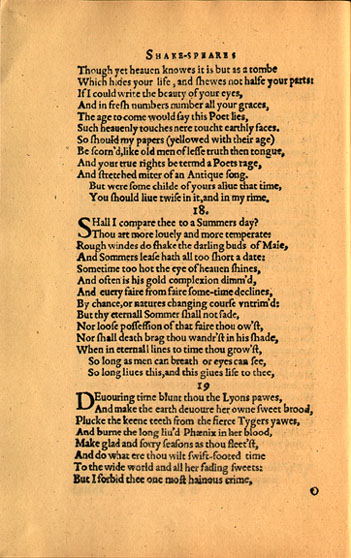
A completare la proposta, il testo originale, edito nel 1609, nel tipico pentametro giambico shakespeariano:
Shall I compare thee to a summer’s day?
Thou art more lovely and more temperate:
Rough winds do shake the darling buds of May,
And summer’s lease hath all too short a date;
Sometime too hot the eye of heaven shines,
And often is his gold complexion dimm’d;
And every fair from fair sometime declines,
By chance or nature’s changing course untrimm’d;
But thy eternal summer shall not fade,
Nor lose possession of that fair thou ow’st;
Nor shall Death brag thou wander’st in his shade,
When in eternal lines to time thou grow’st: So long as men can breathe or eyes can see, So long lives this, and this gives life to thee.
e la storica traduzione italiana di Mario Praz (1966)
Ti comparerò dunque a giornata di estate?
Tu sei ben più leggiadro e meglio temperato:
Ruvidi venti sferzano i soavi boccioli di maggio
E il termine di estate troppo ha breve durata;
Troppo ardente talvolta splende l’occhio del cielo,
E sovente velato è il suo aureo sembiante,
E ogni bellezza alla fine decade dal suo stato,
Spoglia dal caso, o dal mutevole corso di natura:
Ma la sua eterna estate non potrà mai svanire
Né perdere il possesso delle tue bellezze,
Né la Morte vantarsi di averti nell’ombra sua,
Poiché tu crescerai nel tempo in versi eterni.
Sin che respireranno uomini, e occhi vedranno
Di altrettanto vivranno queste rime,
e daranno vita a te.
Forse non nel tempo o nello spazio, sicuramente nel sentire e nell’ascoltare.
L’unico modo possibile per accedere a questo mondo è quello di escluderne ogni altro.
Provateci.
L’autore di questa infinita malinconia meditativa, Les Pleurs (Il Pianto), è Monsieur de Sainte-Colombe (c. 1640. – c. 1700), straordinario compositore per viola da gamba, famoso al suo tempo ed in seguito ignorato fino al 1966, anno del ritrovamento del manoscritto dei suoi 65 Concerts à deux violes esgales.
Oltre a questa versione di Les Pleurs a due viole da gamba di Jordi Savall e Christophe Coin, ne esiste una per sola viola da gamba, incisa dallo stesso Savall
Se vi interessa saperne qualcosa di più, vi consiglio il romanzo di Pascal Quignard, Tutte le mattine del Mondo (1987), da cui venne tratto nel 1991 un omonimo film diretto da Alain Comeau, con una straordinaria colonna sonora incisa da Le Concert de Nations con la direzione di Savall, massimo interprete di Sainte-Colombe.
La parte letteraria del post è composta dai silenzi saturi che Les Pleurs potrà avervi donato.
Secondo Marcello sì (Amleto, Atto I, Scena IV) ma anche secondo The Killing (Forbrydelsen), serie TV danese del 2007, nella quale si scopre che il malcostume della politica e l’inefficienza delle istituzioni sono diffuse anche da quelle parti.
Noi, in tutta franchezza, non l’avremmo proprio detto, quel paese ci era sempre parso esempio di rara civiltà.
Al solito tendo a divagare, tutto il mondo è paese, pur nella diversità.
Ritorniamo al punto: questo primo post di maggio è italo-danese ed è dedicato all’eclettica Karoline Borelli, poetessa versatile e curiosa.
Inutile dire che è ospitata in queste pagine perché ci piace il suo variare temi e tecniche compositive. Se, per altri, l’identità poetica e la riconoscibilità sono un pregio, quel che rende interessante Karoline è l’imprevedibilità: il lettore non sa mai cosa aspettarsi.
Tranne l’inaspettato, ovviamente.
Le poesie presenti nella pagina Specchi appartengono ad umori e momenti diversi, alcune presenti nel suo blog, altre inedite.
La immagini di questo post, appartengono a Magdalene Margrethe Bärens (30/10/1737 – 6/06/1808) prima artista professionista danese, mentre la pagina di Karoline vi introdurrà ad Agnes e Harold Slott-Møller, coniugi pittori danesi a cavallo del 1900.
Per chi avesse mancato tutti i link precedenti, Specchi si trova QUI.



 ilbabau.net